Explore this article
Quick answer
What this article explains
They seem to have a mood. A memory. A small attitude. They look as if they are about to react, hide, complain, comfort someone, or start a quiet adventure.
A plush character cannot move. It cannot speak. It cannot change expression.
And yet, some plush characters feel strangely alive.
They seem to have a mood. A memory. A small attitude. They look as if they are about to react, hide, complain, comfort someone, or start a quiet adventure.
This feeling does not happen by accident. It comes from design decisions.
At JUSTPLUSH, we believe the most memorable plush characters are not always the cutest or the most detailed. They are the ones that carry a sense of inner life.
Life begins with posture
Posture is one of the first signals people read.
- A character standing straight can feel confident.
- A slightly tilted head can feel curious.
- A rounded seated body can feel calm and approachable.
- A small forward lean can feel eager or shy.
Even when a plush product is completely still, posture can suggest movement. It gives the viewer a feeling that something happened before this moment, or something may happen next.
This is why posture matters in plush design. It creates a quiet form of storytelling.
Micro-expression changes everything
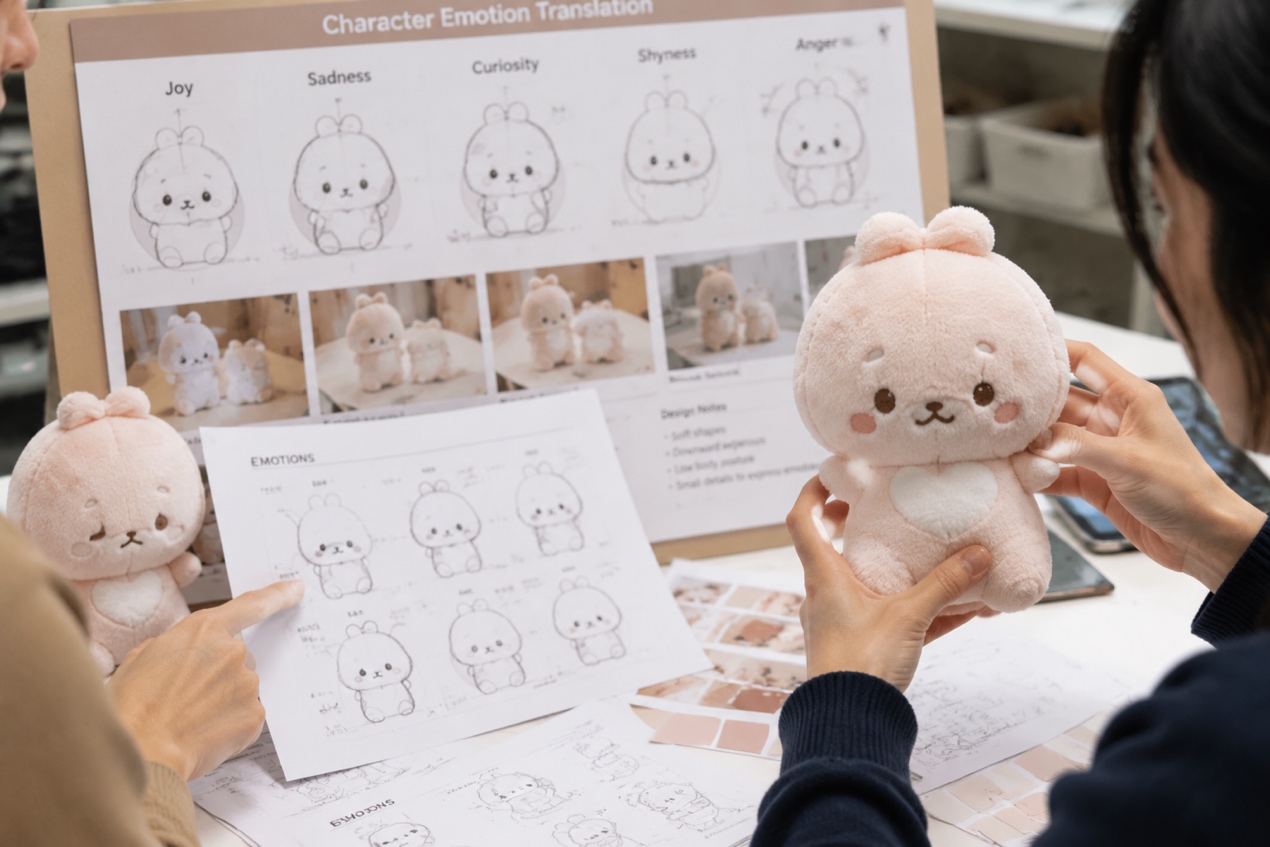
A tiny change in the face can completely change how a plush character feels.
The distance between the eyes, the angle of the eyebrows, the curve of the mouth, or the position of the cheeks can make a character feel sleepy, stubborn, innocent, awkward, proud, or lonely.
These details do not need to be dramatic. In fact, subtle expressions often feel more natural.
A plush character with an overly obvious smile may feel generic. A character with a softer, more specific expression can feel more human.
Imperfection creates emotion
Perfect symmetry can sometimes make a character feel lifeless.
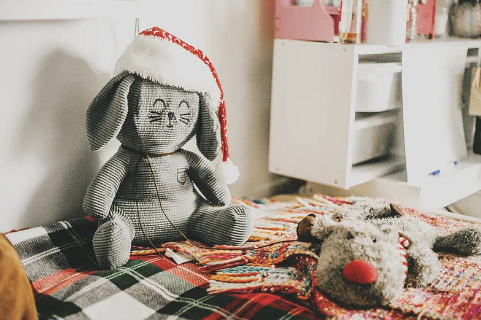
A small imperfection often makes a plush character more memorable. One ear slightly lower than the other. A face that feels a little uncertain. A body shape that is not perfectly balanced. A quiet awkwardness in the posture.
These small choices can create emotional warmth.
People are often drawn to characters that feel slightly imperfect because imperfection feels real. It gives the product personality instead of polish alone.
Softness needs personality
Softness is expected in plush. But softness alone is not enough.
A plush product becomes more interesting when softness is connected to a clear personality. Is the character gentle? Sleepy? Strange? Brave? Nervous? Mischievous?
The material, shape, expression, and posture should all support that personality.
When these elements work together, the plush does not feel like an object. It feels like a character with a quiet emotional presence.
Why this matters for brands and IP owners
For brands, creators, and IP owners, the question is not only whether a plush product looks good.
The deeper question is:
Does it feel alive enough for people to care?
A plush character with life can become more than merchandise. It can become a companion, a collectible, a mascot, a campaign symbol, or part of a larger character world.
This is why JUSTPLUSH looks at plush design through emotion, not only appearance.
A character that feels alive is easier to remember.
And in character products, being remembered is the beginning of value.