Explore this article
Quick answer
What this article explains
They fail when a beautiful sketch cannot become a stable 3D shape. They fail when a character has too many tiny details to be reproduced consistently. They fail when the fabric chosen for appearance does not support the...
Many plush projects do not fail in the factory. They fail much earlier.
They fail when a beautiful sketch cannot become a stable 3D shape. They fail when a character has too many tiny details to be reproduced consistently. They fail when the fabric chosen for appearance does not support the right touch, weight, or structure. They fail when a brand treats plush as a simple product instead of a character experience.
At JUSTPLUSH, we often meet creators, brands, and IP owners who come to us with strong ideas. Some bring a mascot. Some bring a sketch. Some bring a fully developed character world. The idea may be memorable, emotional, and visually attractive. But turning that idea into a plush product requires a different kind of thinking.
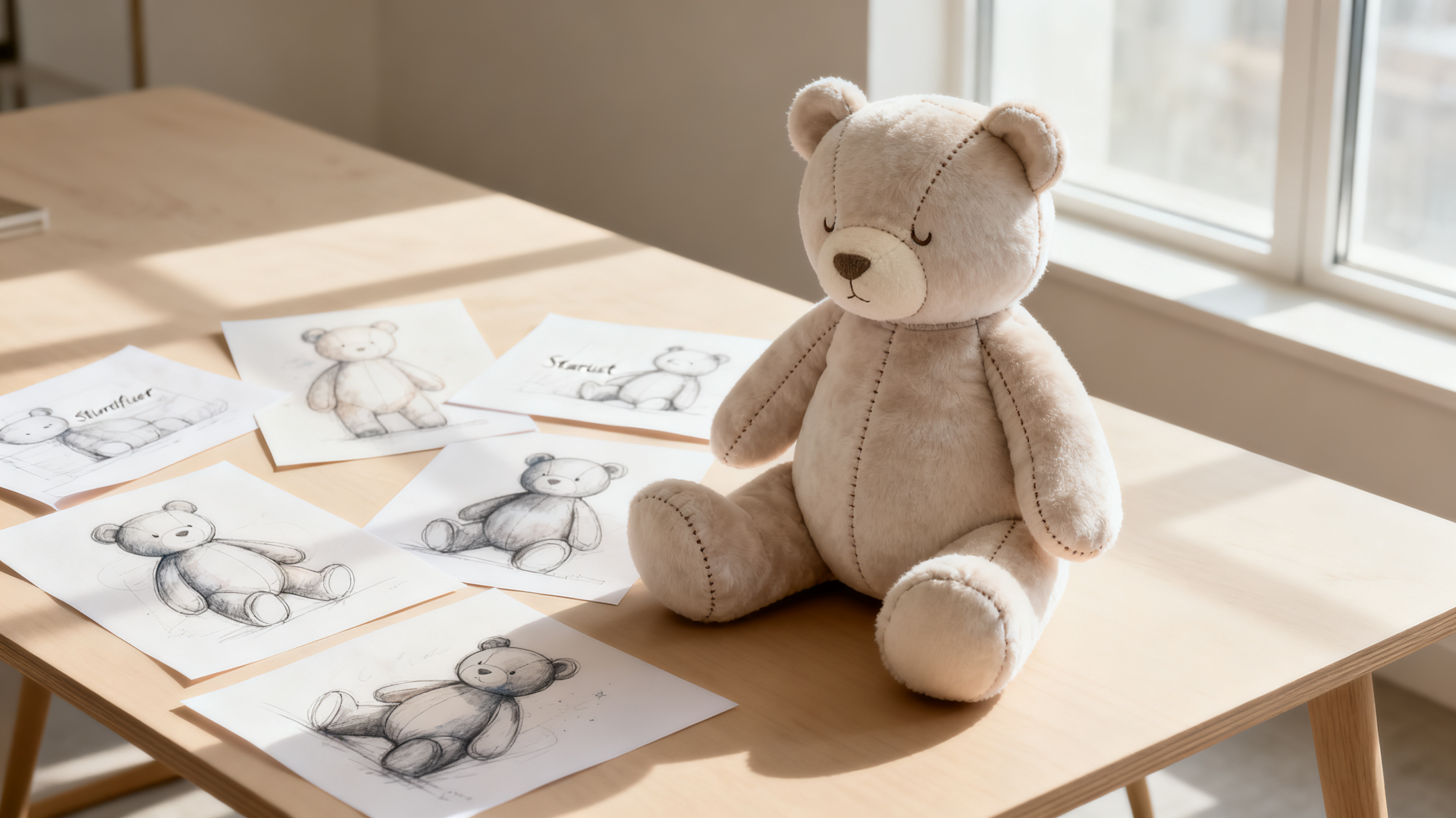
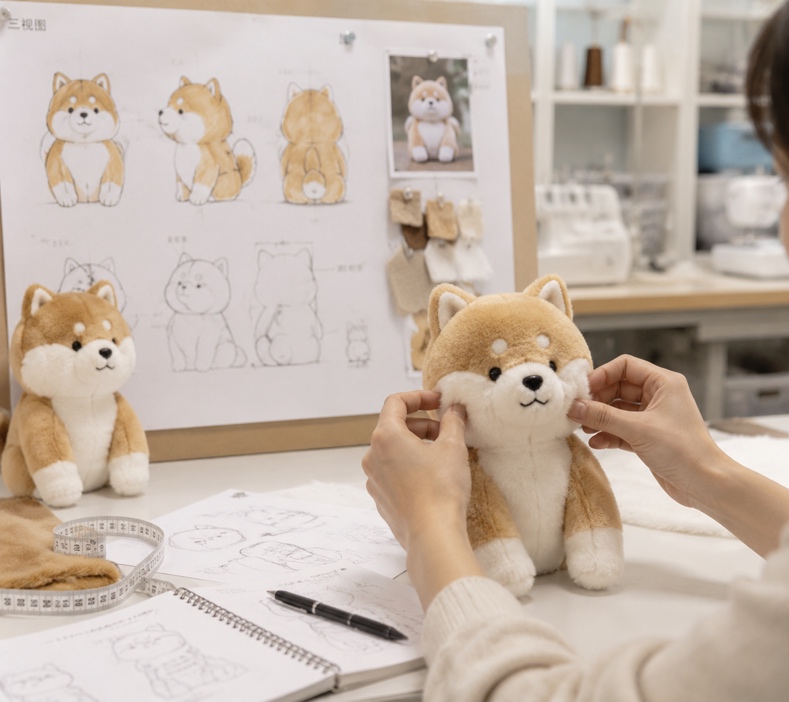
A plush product is not a flat illustration. It has volume, softness, balance, expression, texture, and proportion. A line that works perfectly on paper may disappear in fabric. A small facial detail may become unclear after embroidery. A dramatic character shape may lose balance when it becomes a physical object.
This is why the development stage matters so much.
The gap between 2D design and 3D plush
One of the most common challenges in custom plush development is the translation from 2D to 3D.
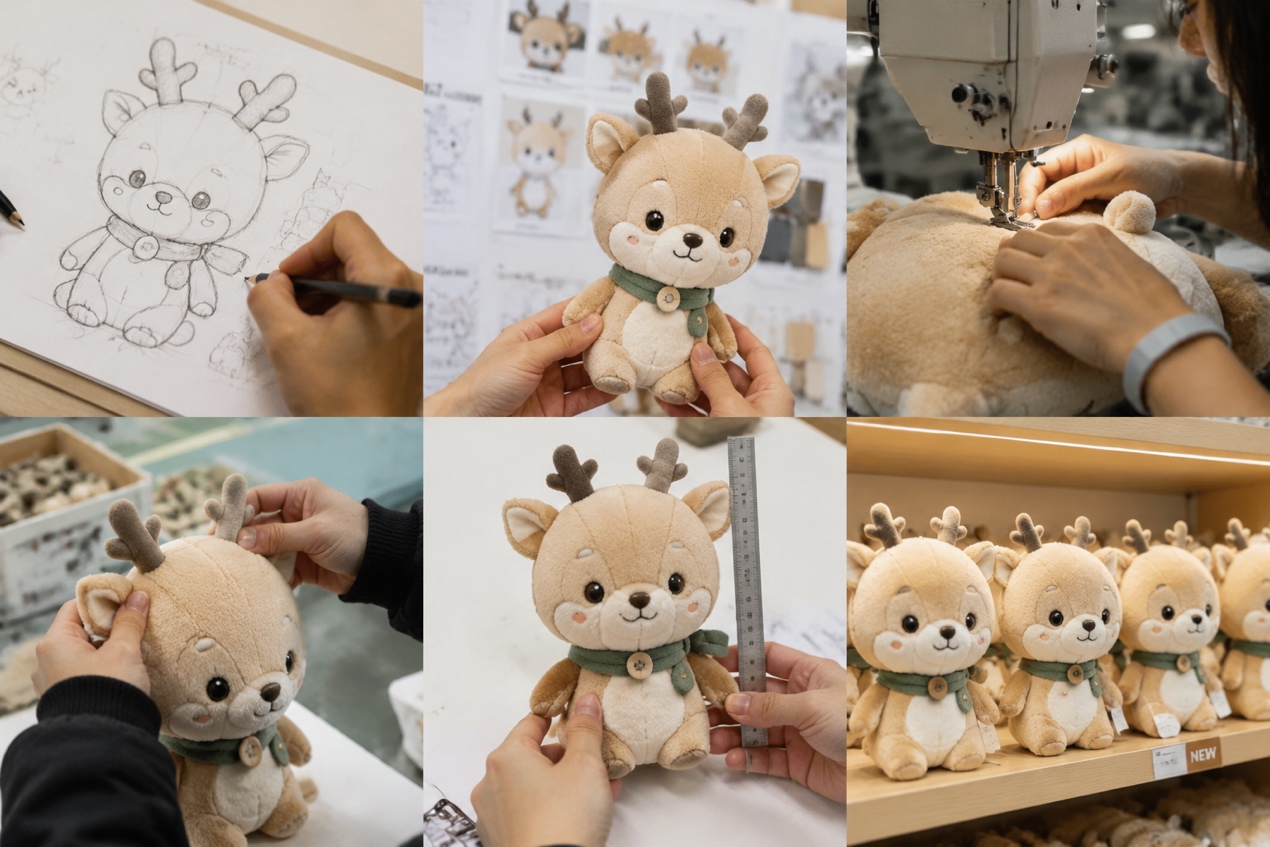
In a drawing, the character can have perfect angles, clean outlines, and detailed expressions. In plush, every part needs to be built through fabric panels, stitching, filling, embroidery, and structure. The final product must still feel like the original character, but it also needs to be soft, safe, stable, and manufacturable.
This is where many projects become difficult.
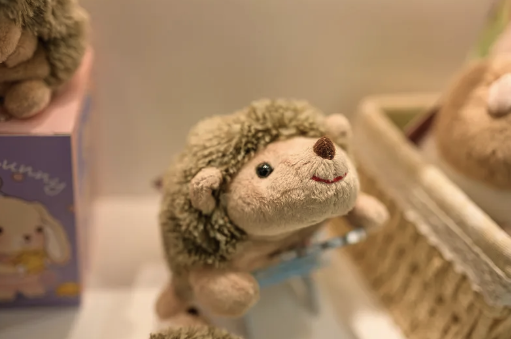
- If the head is too large, the plush may not sit properly.
- If the limbs are too thin, they may lose shape.
- If the expression is too detailed, it may not read clearly from a distance.
- If the body shape is too flat, the product may lack character presence.
Good plush development does not simply copy a design. It interprets the design into a form that works physically.
A sample is not just a sample
Some customers see the first prototype as a test of the factory. We see it as a conversation.
The first sample reveals what the drawing did not show. It tells us whether the character’s proportions feel right, whether the face has the right emotion, whether the fabric supports the personality, and whether the product feels good in the hand.
Very often, the first sample is not the final answer. It is the beginning of refinement.
The best plush products usually come from thoughtful adjustments: moving the eyes slightly, changing the mouth shape, increasing the body volume, softening the fabric, adjusting the stuffing, or simplifying unnecessary details.
These small decisions often decide whether a plush product feels ordinary or memorable.
Manufacturing starts before production
Real manufacturing perspective begins before mass production.
Before cutting fabric in bulk, we need to ask:
- Does the character work as a plush product?
- Can the key features be produced consistently?
- Is the material suitable for the target audience?
- Will the product feel valuable in retail or gifting?
- Can the design support future collections or IP growth?
These questions are not only technical. They are strategic.
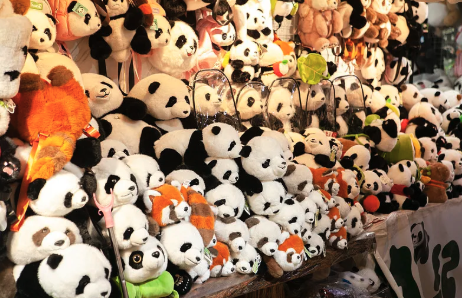
For brands, a plush product is often a physical touchpoint with customers. For IP owners, it can become part of a larger character system. For retailers, it needs shelf appeal. For promotional companies, it needs to carry brand emotion quickly.
A poorly developed plush product can waste time, budget, and market opportunity. A well-developed plush product can become a memorable brand asset.
What JUSTPLUSH brings to the process
JUSTPLUSH is not only focused on making plush products. We help partners turn ideas into products that can connect with people.
Our work often begins with understanding the character: its personality, audience, emotional value, and intended use. From there, we help evaluate proportion, material, structure, production feasibility, packaging direction, and long-term product potential.
This is where creative plush development becomes different from basic plush manufacturing.
A great plush idea deserves more than quick production. It deserves careful translation, practical development, and manufacturing experience that protects the original idea.
Because the best plush products are not created when production starts.
They are created before production begins.