Explore this article
Quick answer
What this article explains
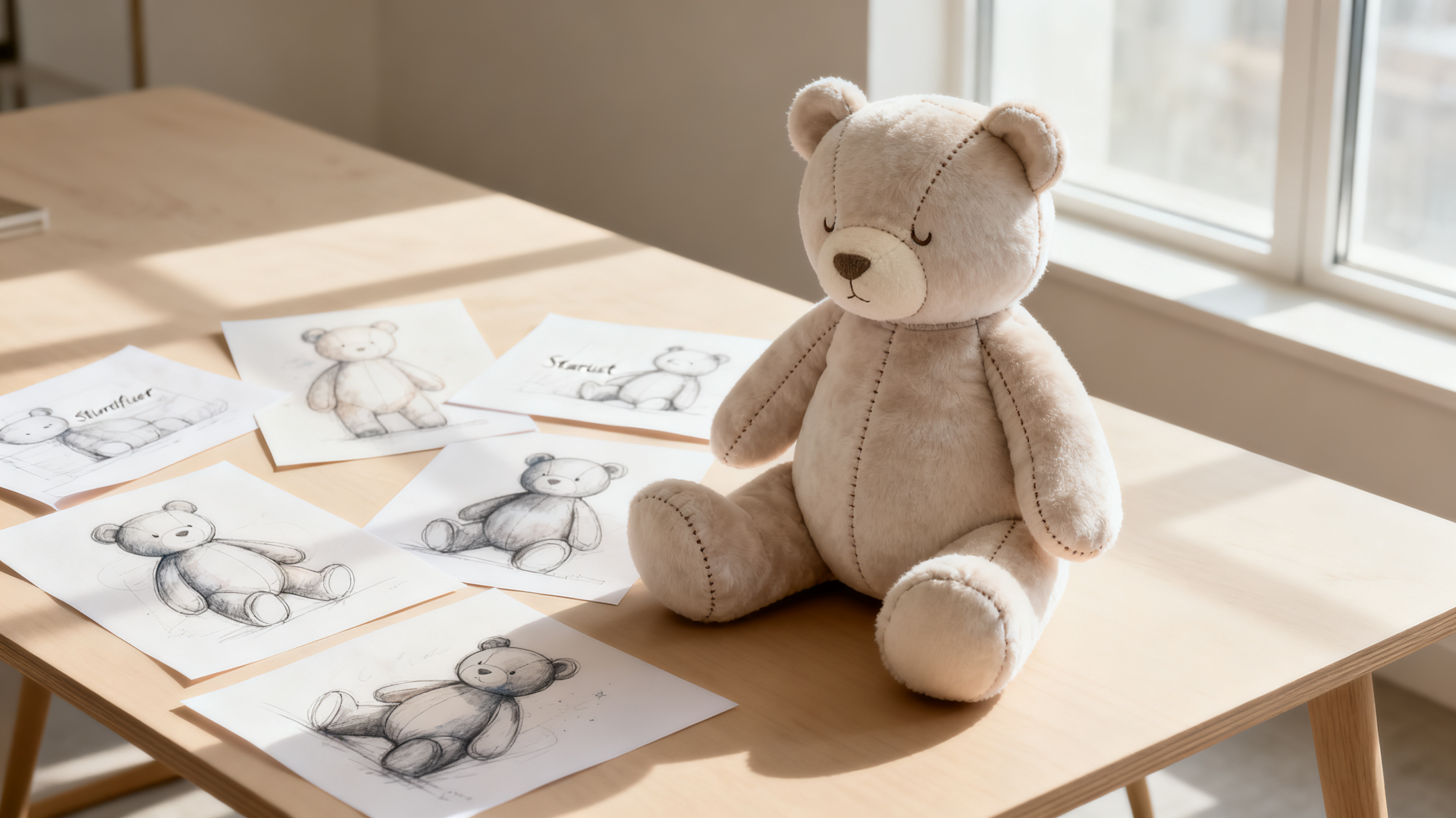
A plush product may look simple when it reaches the shelf. Soft fabric, a familiar face, a clean shape, a tag, a package.
A plush product may look simple when it reaches the shelf. Soft fabric, a familiar face, a clean shape, a tag, a package.
But behind that final product is a long series of decisions.
For brands, creators, and retailers, understanding this process can help avoid delays, reduce sampling costs, and create better products. At JUSTPLUSH, we often describe plush development as a journey from idea to character, from character to product, and from product to market.
Step 1: Understanding the idea
Every project begins with a starting point.
Sometimes it is a sketch. Sometimes it is a mascot. Sometimes it is an existing IP character. Sometimes it is only a product direction: “We want something cute, soft, collectible, and suitable for our brand.”
Before development begins, the most important question is not “How much does it cost?”
The first question should be:
What should this plush product make people feel?
- A baby plush product needs softness and trust.
- A collectible plush needs personality and display value.
- A brand mascot needs instant recognition.
- A promotional plush gift needs emotional impact.
- An IP plush product needs character accuracy and story connection.
Different goals lead to different product decisions.
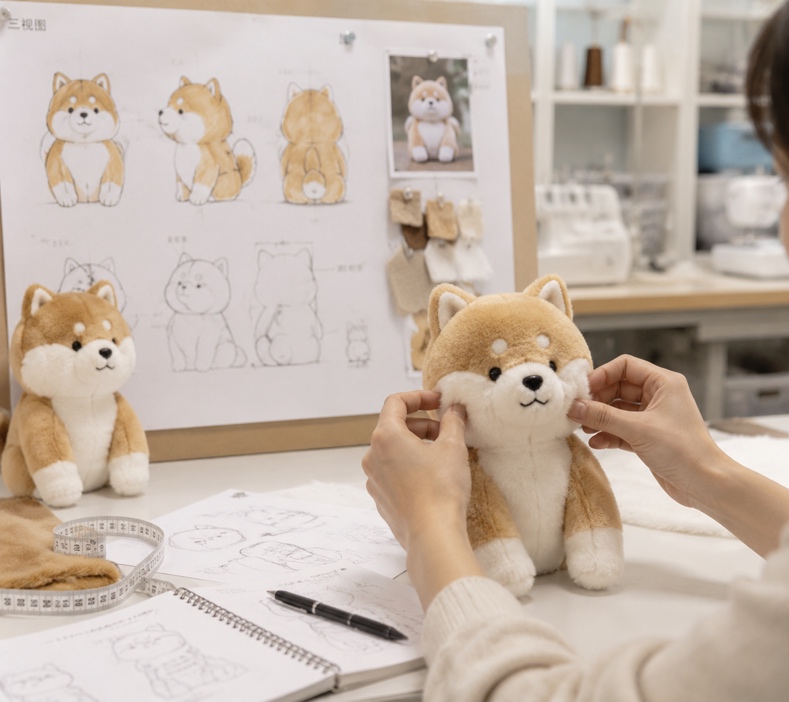
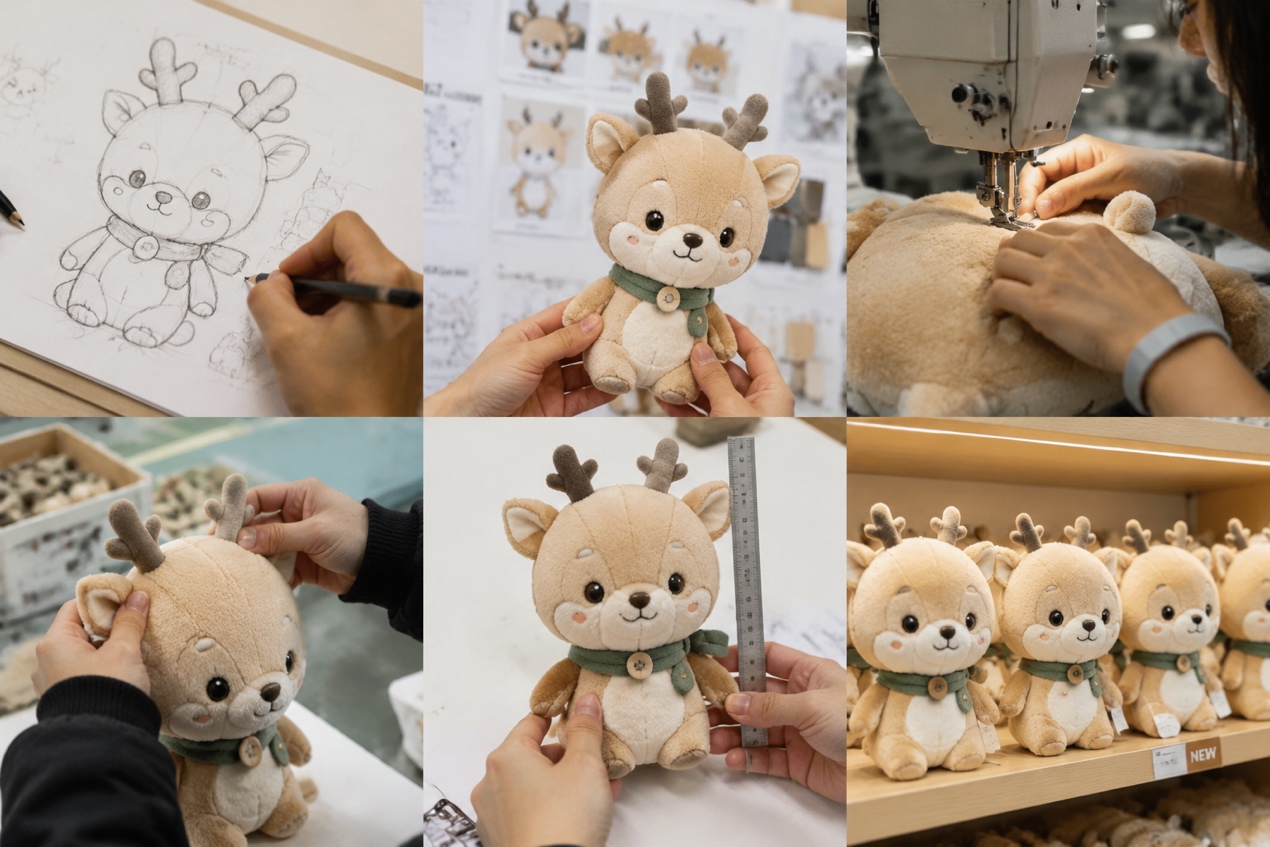
Step 2: Translating 2D into 3D
A sketch is only the beginning.
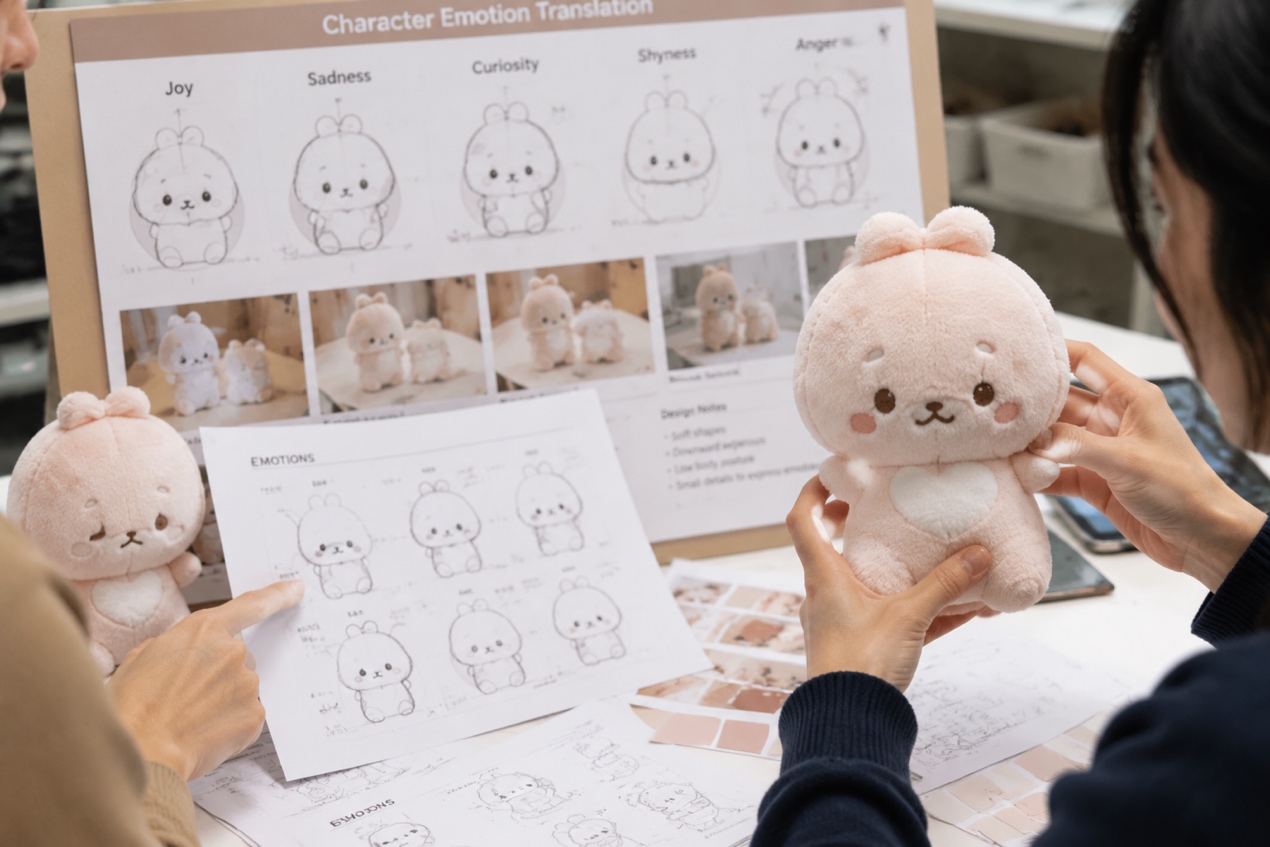
When a character becomes plush, it needs depth, structure, balance, and touch. The shape must be simplified enough for production, but not so much that the character loses identity.
This step often includes decisions about:
- Head size
- Body proportion
- Eye position
- Embroidery style
- Fabric direction
- Limb shape
- Sitting or standing posture
- Stuffing level
- Key visual details
A good plush product keeps the soul of the original character while making it work in the physical world.
Step 3: Making the first sample
The first sample is where the idea becomes real.It is also where many hidden issues appear.
The face may look different in fabric. The body may feel too flat. The fabric may not match the character’s personality. The product may be too heavy, too light, too stiff, or too soft.
This is normal.
Sample development is not about getting everything perfect on the first try. It is about finding the right direction through real material, real shape, and real hand-feel.
For B2B customers, this stage is especially important because it affects the success of bulk production. A clear, well-reviewed sample reduces risk later.
Step 4: Material selection
Material is not just a cost item.It affects the entire product experience.
Short plush can make a character look clean and graphic. Long plush can make it feel warmer and more emotional. A firmer fabric can help maintain structure. A softer fabric can improve hug value. Embroidery can add detail, while printing may support more complex patterns.
The right material depends on the product’s purpose.
- A baby plush product may require extra attention to softness and safety.
- A collectible plush may need fabric with strong visual texture.
- A retail plush collection may require a balance between cost, durability, and perceived value.
- A licensed character plush needs materials that protect the original visual identity.
Choosing fabric only by price is one of the easiest ways to weaken a plush product.
Step 5: Production planning
Once the sample is confirmed, production planning begins.
This includes pattern confirmation, fabric sourcing, embroidery setup, cutting, sewing, stuffing, finishing, inspection, packaging, and shipment.
At this stage, consistency becomes critical.
A plush product may involve many handmade steps. Small differences in sewing, stuffing, or facial placement can change the final look. That is why production control matters, especially for characters with strong identity.
For brands and IP owners, consistency is not only a quality issue. It is a brand issue.
Step 6: Packaging and presentation
Many brands underestimate packaging.
But packaging changes how people perceive value.
A plush product in a simple polybag may feel like a basic toy. The same plush with a well-designed hangtag, box, card, or display packaging can feel like a gift, a collectible, or part of a brand world.
Packaging should not be an afterthought. It should support the product story.
Step 7: Shelf, campaign, or community
The final destination matters.
- A plush product for retail needs shelf impact.
- A plush product for an event needs instant recognition.
- A plush product for an IP launch needs storytelling.
- A plush product for a brand campaign needs shareability.
- A plush product for a collector audience needs emotional and visual value.
The best plush products are developed with the final use in mind from the beginning.
Plush development is product thinking
From sketch to shelf, every decision matters.
At JUSTPLUSH, we help partners move through this process with both creative and manufacturing experience. We do not see plush as only a soft toy. We see it as a character product, a brand touchpoint, and sometimes the beginning of a larger IP journey.
A successful plush product is not only made.
It is developed.